
AI for Game Developers 101: A Beginner's Guide
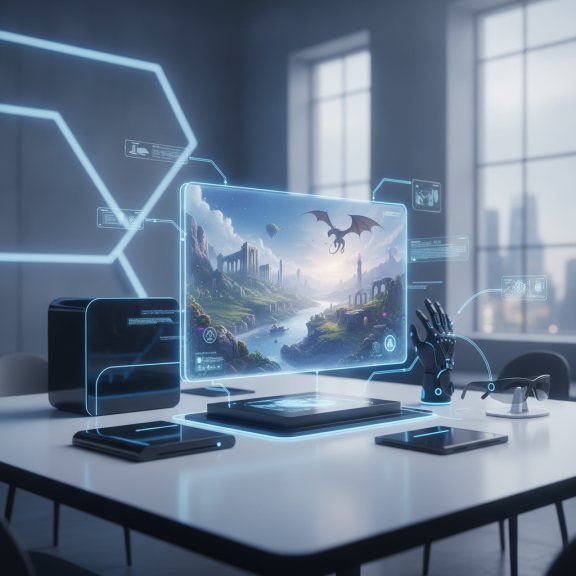
As the gaming industry continues to evolve, artificial intelligence (AI) has become a crucial component in creating immersive and engaging gaming experiences. For game developers, understanding the basics of AI can be a game-changer, enabling them to craft more realistic characters, environments, and gameplay mechanics. In this comprehensive guide, we'll delve into the world of AI for game developers, exploring its background, key trends, real-world applications, and the UniVRse perspective.
Introduction
Game development has come a long way since the early days of pixelated graphics and simple gameplay mechanics. Today, games are more sophisticated, with lifelike characters, realistic environments, and complex gameplay mechanics. AI has played a significant role in this evolution, enabling game developers to create more immersive and engaging experiences. But what exactly is AI, and how can game developers harness its power? In this article, we'll explore the fundamentals of AI for game developers, covering its background, key trends, and real-world applications.
"AI is not just a tool, it's a partner that can help game developers create more engaging, more immersive, and more realistic experiences." - Dr. Fei-Fei Li, Director of the Stanford Artificial Intelligence Lab
Background
Artificial intelligence is a broad field that encompasses a range of techniques and technologies, including machine learning, natural language processing, and computer vision. In the context of game development, AI refers to the use of algorithms and statistical models to enable computers to perform tasks that would normally require human intelligence. This can include tasks such as decision-making, problem-solving, and learning from data.
There are several types of AI that are commonly used in game development, including:
- Rule-based AI: This type of AI uses a set of pre-defined rules to make decisions and take actions.
- Behavioral AI: This type of AI uses machine learning algorithms to enable characters to exhibit realistic behaviors, such as walking, running, and interacting with their environment.
- Hybrid AI: This type of AI combines rule-based and behavioral AI to create more complex and realistic characters.
Key Trends
The use of AI in game development is rapidly evolving, with several key trends emerging in recent years. These include:
- Increased use of machine learning: Machine learning algorithms are becoming increasingly popular in game development, enabling developers to create more realistic and responsive characters.
- Advancements in computer vision: Computer vision is being used to create more realistic environments and characters, enabling developers to create immersive and engaging experiences.
- Rise of AI-powered game engines: AI-powered game engines are becoming increasingly popular, enabling developers to create more complex and realistic games with ease.
Real-World Applications
AI is being used in a wide range of game development applications, including:
- Character animation: AI is being used to create more realistic character animations, enabling developers to create more engaging and immersive experiences.
- Gameplay mechanics: AI is being used to create more realistic gameplay mechanics, such as enemy AI and physics-based simulations.
- Virtual reality and augmented reality: AI is being used to create more immersive and engaging virtual reality and augmented reality experiences.
"AI has the potential to revolutionize the gaming industry, enabling developers to create more immersive, more engaging, and more realistic experiences." - Dr. Ian Goodfellow, Research Scientist at Google Brain
UniVRse Perspective
At UniVRse, we believe that AI has the potential to revolutionize the gaming industry, enabling developers to create more immersive, engaging, and realistic experiences. Our AI-powered game development platform is designed to help developers harness the power of AI, creating more complex and realistic games with ease. With our platform, developers can create more realistic characters, environments, and gameplay mechanics, enabling them to craft more engaging and immersive experiences.
Conclusion
In conclusion, AI is a powerful tool for game developers, enabling them to create more immersive, engaging, and realistic experiences. From character animation to gameplay mechanics, AI is being used in a wide range of game development applications. As the gaming industry continues to evolve, we can expect to see even more innovative uses of AI in game development. At UniVRse, we're committed to helping developers harness the power of AI, creating more complex and realistic games with ease. Whether you're a seasoned developer or just starting out, we invite you to join us on this exciting journey into the world of AI-powered game development.
Get Started with UniVRse
If you're interested in learning more about AI-powered game development, we invite you to explore our platform and discover how our AI-powered tools can help you create more immersive and engaging experiences. With UniVRse, you can:
Join us today and discover the power of AI-powered game development.
- Create more realistic characters: Use our AI-powered character animation tools to create more realistic and responsive characters.
- Craft more engaging gameplay mechanics: Use our AI-powered gameplay mechanics tools to create more realistic and immersive gameplay experiences.
- Develop more complex games: Use our AI-powered game development platform to create more complex and realistic games with ease.
