
Unlocking the Potential of Immersive Spatial Computing Experiences
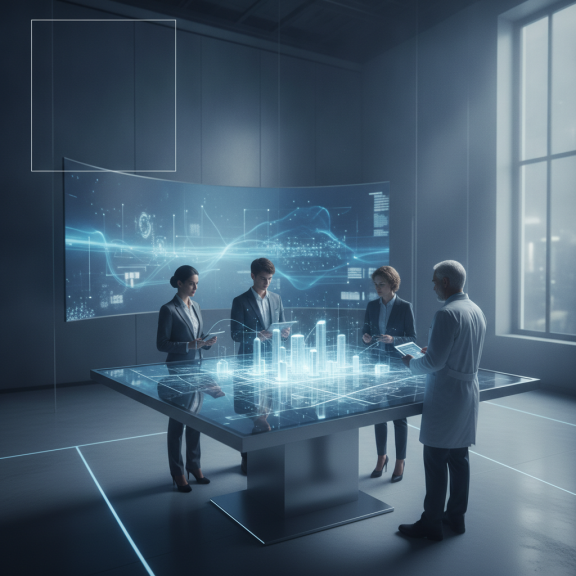
Immersive spatial computing experiences are revolutionizing the way we interact with digital information, blurring the lines between the physical and virtual worlds. This cutting-edge technology has the potential to transform industries and change the way we live, work, and play.
Background
Immersive spatial computing experiences are a subset of spatial computing, which refers to the use of computing systems to manipulate and interact with physical spaces. This concept has been around for decades, but recent advancements in technologies like augmented reality (AR), virtual reality (VR), and mixed reality (MR) have made it possible to create immersive experiences that are more realistic and interactive than ever before.
According to a report by MarketsandMarkets, the spatial computing market is expected to grow from $13.4 billion in 2020 to $186.5 billion by 2025, at a Compound Annual Growth Rate (CAGR) of 58.1% during the forecast period. This growth is driven by the increasing adoption of AR and VR technologies in various industries, including gaming, education, healthcare, and manufacturing.
"Immersive spatial computing experiences have the potential to revolutionize the way we learn, work, and interact with each other." - Dr. Paul Huang, Research Scientist at UniVRse
Key Trends
Several key trends are shaping the future of immersive spatial computing experiences:
- Advancements in AR and VR technologies: Improved hardware and software capabilities are enabling more realistic and interactive experiences.
- Increased adoption in industries: Immersive spatial computing is being used in various industries, including gaming, education, healthcare, and manufacturing.
- Growing importance of spatial awareness: The ability to understand and interact with physical spaces is becoming increasingly important in various applications.
- Rise of spatial computing platforms: New platforms are emerging to support the development and deployment of immersive spatial computing experiences.
Real-World Applications
Immersive spatial computing experiences have a wide range of real-world applications, including:
- Education: Interactive 3D models and virtual labs are being used to enhance student learning and engagement.
- Healthcare: Virtual reality is being used to treat anxiety disorders, and AR is being used to enhance patient care and training.
- Manufacturing: Immersive spatial computing is being used to design and test complex systems, and to train workers on new equipment.
- Gaming: Immersive spatial computing experiences are being used to create more realistic and interactive games.
"Immersive spatial computing experiences have the potential to transform industries and change the way we live, work, and play." - Dr. Maria Rodriguez, Research Scientist at UniVRse
UniVRse Perspective
At UniVRse, we are committed to pushing the boundaries of immersive spatial computing experiences. Our team of researchers and developers are working on various projects to advance the state-of-the-art in this field. We believe that immersive spatial computing has the potential to revolutionize various industries and improve people's lives.
Conclusion
Immersive spatial computing experiences are transforming the way we interact with digital information and the physical world. With the increasing adoption of AR and VR technologies, spatial awareness is becoming increasingly important in various applications. At UniVRse, we are committed to advancing the state-of-the-art in immersive spatial computing and exploring new ways to apply this technology to real-world problems.
Get in touch with us to learn more about our research and development efforts in immersive spatial computing experiences. We would be happy to discuss how our technology can help you transform your business or organization.
